Pillow Materials & Sleep Comfort
What to Know About Plant-Based PLA Pillow Fill
A pillow can look wonderfully fluffy on a shelf and still feel completely wrong by midnight. Fill makes a big difference: it shapes how a pillow gives, springs back, handles moisture, and settles beneath your head. Plant-based PLA is one alternative to explore if you want a resilient, down-free pillow with a soft, airy feel.
Here’s what PLA is, what it may feel like in everyday use, and how to weigh the fill alongside loft, shell fabric, and care instructions before choosing a pillow.
First things first: What is PLA?
PLA is short for polylactic acid, a material that can be made from renewable plant resources. In pillow fill, it is formed into fibers designed to provide loft and softness. In the Naturepedic Organic Cotton and PLA Pillow, the fill is described as plant-based PLA derived from sugar cane, paired with an organic cotton shell.
The phrase “plant-based” tells you something about the material’s source, but it does not mean the pillow is made from raw plant fibers in the way a cotton pillow might be. PLA is processed into a fiber for use in products. That distinction is useful when comparing materials: origin is one part of the story, while construction, performance, certifications, and end-of-life options are separate questions.
PLA is sometimes discussed as a bio-based alternative to conventional petroleum-derived synthetics. But the details matter. A plant-based starting material does not automatically tell you how a finished product was manufactured, how long it will last, or whether it can be composted in a particular setting. For a pillow, the practical questions are more immediate: Does it feel comfortable? Does it suit your sleeping position? Can you care for it as recommended?
How does PLA pillow fill feel?
PLA fill is designed to feel fluffy and resilient. “Resilient” is a useful word here: it refers to a fiber’s ability to regain some of its shape after pressure. When you rest your head on a pillow, the fill compresses. A resilient filling can help the pillow feel springy rather than permanently flattened, though every pillow’s performance depends on its construction and use.
Descriptions of PLA pillows often emphasize a light, cushioned feel. The Naturepedic pillow, for example, is presented as offering comfortable fluffiness, with moisture-wicking properties. That combination may appeal to sleepers looking for a soft, buoyant alternative to down, or to those who prefer not to choose an animal-derived fill.
Still, no material feels identical to every sleeper. One person’s “plush” can be another person’s “too lofty,” and the same pillow may feel different depending on how firmly someone rests their head, the mattress beneath them, and whether they sleep on their side, back, or stomach. If you can test a pillow in person or review the seller’s return policy, do so. A materials description is helpful, but it cannot replace your own comfort check.
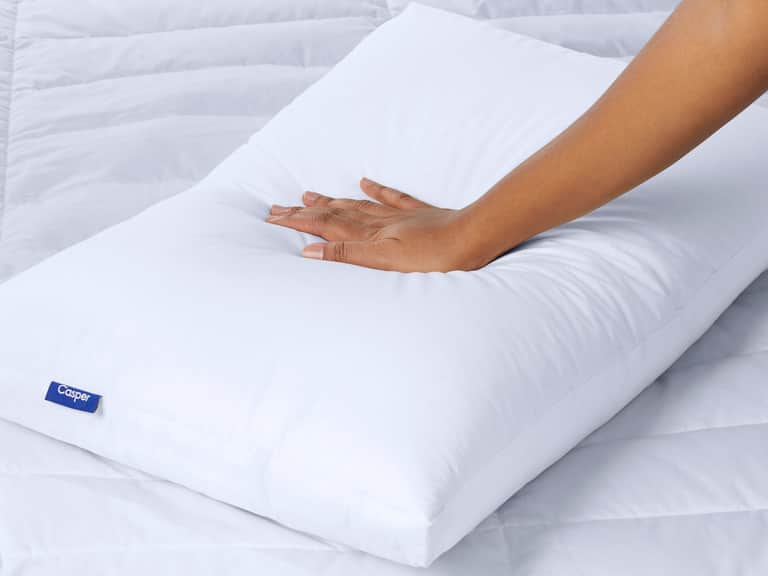
It is also worth separating softness from support. A pillow can feel soft at the surface and still hold its shape; another can feel plush initially but compress more than you want. Neither label tells the whole story. Consider how the pillow feels after a few minutes, not just the first moment you press your hand into it.
PLA compared with down and conventional synthetic fill
There is no single best pillow fill for everyone. Down, plant-based PLA, and conventional synthetic fibers each bring different qualities, and the right choice depends on personal priorities as much as on the material itself.
- Down: Often prized for its airy softness and compressibility. Some down pillows use chambers or other construction features to help distribute fill. Down comes from animals, so sourcing and personal preferences may influence whether it is an option for you.
- PLA: A plant-derived fiber fill that can offer a fluffy, resilient feel. It is a non-down choice for sleepers who want a soft cushion and are interested in a fiber made from renewable plant resources.
- Conventional synthetic fill: A broad category that includes many types of manufactured fibers. Feel, durability, washability, and material composition vary considerably, so check the product’s specifications rather than assuming all synthetic pillows perform alike.
These comparisons are best treated as starting points, not guarantees. A high-quality down pillow may feel very different from another down pillow, just as two pillows labeled PLA may differ in fill amount, chamber design, shell fabric, and dimensions. Construction matters. So does how much fill is used and how it is arranged.
If you currently use down and want to try a non-down option, PLA could be worth considering for its soft, resilient profile. If you are moving from a firmer synthetic pillow, however, a fluffy PLA pillow may feel noticeably different. Think about what you like or dislike in your current pillow before switching: Is it too flat, too dense, too warm, or difficult to care for? A clear answer helps narrow the search.
The shell matters, too
It is easy to focus entirely on fill, but the outer fabric is the part that touches your face and hair. It also changes how a pillow feels, breathes, and responds to a pillowcase. A cotton shell may feel different from a slicker synthetic cover, even when the filling inside is similar.
Naturepedic pairs its PLA fill with an organic cotton shell. That combination brings together two distinct materials: a plant-based manufactured fiber in the center and cotton fabric around it. If organic materials are important to you, check the product’s labeling and available certification information carefully. A description of one component should not be read as a certification claim for every part of the finished pillow.
Consider the shell’s texture and construction as well as its stated material. A tightly woven cover may feel smooth and help contain fine fibers, while a softer or more textured surface may have a different hand. Look for practical details such as stitching, closure design, and whether the pillow is intended to be used with a separate pillow protector. A protector can add a washable barrier, but it may also affect the overall feel.
Temperature is personal, too. A fiber’s moisture-wicking qualities may be appealing if you dislike a damp or clammy sensation, but no fill alone can promise a cool night. Room temperature, bedding layers, humidity, sleepwear, and individual physiology all play a role. Treat performance language as a guide to investigate, not as a guarantee of a particular sleep temperature.
Choose loft with your sleep position in mind
Loft is the pillow’s height when it is resting in its normal shape. It affects how far your head is lifted and how your neck and shoulders feel. The right loft is not one universal number: body shape, mattress firmness, shoulder width, and sleep position all influence the amount of height that feels comfortable.
- Side sleepers often look for enough height to fill the space between the shoulder and head without pushing the neck upward. A pillow that compresses substantially may feel too low once the head settles into it.
- Back sleepers may prefer a moderate profile that supports the head without tipping the chin sharply toward the chest. The best feel varies, so pay attention to neck comfort rather than relying on a label alone.
- Stomach sleepers commonly prefer a lower profile, since too much height can feel awkward. A very fluffy pillow may be a poor match if it does not compress comfortably for you.
These are broad guidelines, not medical advice or rigid rules. If you share a bed with someone who sleeps differently, each person may need a different pillow. And if you have persistent neck pain, numbness, or other symptoms, a pillow change should not take the place of advice from a qualified health professional.
When comparing PLA pillows, check whether the manufacturer specifies a profile or firmness. If those details are not provided, ask the seller rather than guessing from the word “fluffy.” A pillow’s height in a product photo—or its feel when squeezed in a store—does not always predict how it will compress under your head for several hours.
A closer look at the Naturepedic Organic Cotton and PLA Pillow
The Naturepedic Organic Cotton and PLA Pillow brings together a cotton shell and plant-based PLA fill. Its product description identifies the PLA as derived from sugar cane and characterizes the fill as resilient, moisture-wicking, and comfortably fluffy. For someone seeking a non-down pillow with a plant-derived filling, those are relevant details to compare with their own preferences.
Before choosing it—or any pillow—look beyond the material name. Check the pillow’s dimensions, listed loft, firmness information, and care instructions. Confirm whether the product comes in one size or multiple options, and whether it can be washed at home. These specifics help you understand what ownership will be like after the first night, not just how the pillow sounds in a short description.
It may also help to compare the pillow with your current one. If yours is low and compact, a fluffy fill may feel like a significant change. If your current pillow feels too firm or dense, a resilient fiber fill could be closer to the soft, cushioned sensation you want. But individual results vary, so give yourself time to assess comfort and review any available trial or return terms.
Care and longevity: Read the label before laundry day
Pillow care depends on the complete product, not simply the fiber inside. The shell, stitching, internal construction, and manufacturer’s instructions all matter. Never assume that a pillow is machine washable because another pillow with a similar fill can be washed. The product label is the authority for routine care.
If the pillow is not designed for machine washing, a removable cover or pillow protector can help keep the surface fresh. Wash pillowcases regularly and follow the manufacturer’s advice for airing, spot cleaning, or professional care. If machine washing is permitted, pay attention to water temperature, cycle, detergent, and drying directions. A pillow that remains damp inside can become uncomfortable and may not recover as intended.
Resilience can help a pillow maintain a fuller feel, but it does not make any pillow immune to wear. Over time, use, compression, care, and the surrounding environment can affect loft and comfort. Periodically check whether the pillow still supports you in a way that feels good. If you wake up with a different sensation than you used to, or find yourself repeatedly folding or bunching the pillow to get comfortable, it may be time to reassess it.
Use a pillow protector if it is compatible with your preferences and the pillow’s care guidance. It can be a practical extra layer against everyday soil, but the best choice is one that does not make the pillow feel too warm or alter its loft in a way you dislike.
Questions to ask before buying
A few targeted questions can make a materials comparison much easier. Before settling on a plant-based pillow, consider:
- What is the fill made from, and does the product description identify its source?
- What material is used for the shell, and are any certifications specified?
- Is the loft or firmness described clearly enough to compare with your current pillow?
- How does the pillow feel in your preferred sleep position?
- What are the exact cleaning and drying instructions?
- Does the seller offer a trial period or explain its return policy?
- Are you choosing it for a particular reason—such as avoiding down, preferring a plant-derived fill, or seeking a fluffy feel?
These questions keep the decision grounded in the details that affect daily comfort. “Plant-based” can be a meaningful preference, but it is only one point of comparison. A comfortable pillow should also suit your body, your routine, and your expectations for care.
What “plant-based” does—and does not—tell you
Material descriptions can sound like shorthand for a whole set of qualities. In practice, “plant-based” speaks to the source of a material, not every aspect of the finished item. It does not, on its own, specify the pillow’s firmness, durability, breathability, manufacturing process, or disposal options.
Likewise, words such as “natural,” “clean,” or “eco-friendly” should be read alongside specific product information. Look for clear descriptions of materials and any stated certifications, and contact the manufacturer if an important detail is missing. If you are sensitive to particular materials, verify the complete composition—including shell, fill, thread, and any treatments—rather than relying on a broad category label.
For PLA specifically, renewable plant sourcing may be a reason to consider it, but the pillow remains a finished textile product. Disposal and compostability are not automatic: local facilities and product construction matter, and a pillow containing multiple materials may not be accepted in a composting stream. Check reliable local guidance instead of assuming it can go into household compost.
The bottom line on PLA pillow fill
Plant-based PLA offers a distinct option for sleepers who want a soft, fluffy, non-down pillow. Its resilience may help it retain a springy feel, and its moisture-wicking qualities may be appealing to those who pay close attention to the feel of their sleep surface. A cotton shell can add another material dimension, as in the Naturepedic Organic Cotton and PLA Pillow.
The best choice still comes down to the whole pillow: fill, shell, loft, firmness, care requirements, and fit with your sleeping position. If you are curious about PLA, compare its specifications with the pillow you already enjoy—or the one you are ready to replace. Focus on how it supports you through the night, not just the story behind the fiber.
In the end, a pillow is a very personal piece of bedding. The right one should feel comfortable when your head settles, suit the way you sleep, and be practical to maintain. PLA may be a promising match for some sleepers; careful comparison is what helps you decide whether it is the right match for you.